Wednesday, November 07, 2012

Early Fall Garden Pictures.

Collard Greens,Swiss Chard and Lettuce.

Going to add  row covers soon.

Green beans.

Chinese Cabbage and Italian Radicchio.


Acorn Squash.


Seedlings and Transplants at two weeks old.

Green beans growing. Day 7

Green beans, day 3.

Green bean ,day 2.

Green bean,next morning.

Green bean seedling later that afternoon.

Green bean seedling, Sprouting after 5 days.


Wednesday, October 24, 2012

Organics are Ethical ,Pesticide Free & Taste better !


                         As of late their has been a lot of talk about Organic foods not being more
                         nutritious by several media sources,which of course never present the facts
                         fully. (Sidebar-Read Stanford's "Spin on Organics Allegedly tainted by
                         Biotechnology Funding", namely "Monsanto".)Most people are starting to
                       eat organic for two reasons: reason #1 It has no pesticides,unlike it's conventional
                       counterpart, and #2 Because it's ethical to do.Not because it has more nutrients.
                        But having the choice to eat foods without pesticides,versus foods with it,I'll choose
                        he organic every time. (Sidebar- All organics are not created equal. Organics from
                        other countries may not be under the same regulations as those in the U.S. So
                        try to buy Organic products that are local as well.You can also start your own
                        vegetable garden.) When buying Organic foods speak with the farmers at your
                        farmers market,by doing this you'll learn more about the food you buy and
                        where it comes from.And did I mention that foods at farmers market tends to be a
                        little cheaper. Okay so for the big question,What is Organic? Organic foods are
                        foods produced using methods that do not involve modern synthetic inputs such as
                        synthetic pesticides and chemical fertilizers. Organic foods are also not processed
                       using irradiation, industrial solvents or chemical food additives. A large number
                       of people that eat organic do so because they contain no pesticides and for the ethical
                       treatment of the farm workers, that would otherwise be exposed to deadly chemicals
                       day in and day out on a "conventional farm". I would rather my dollars go to my
                        local farmers that care about their workers and animals. No media outlet out there
                        can tell me my organic veggies aren't better tasting than those in your local grocer.

If you need a  Hazmat suit just to spray your vegetables for pests, what about those eating the vegetables?


Monday, October 08, 2012

Signs that Fall is here...

Harvest Pumpkins at my Local  Nursery

Casper  Pumpkins

Butterfly in my back alley.
October Sky after a good rain.

September morning Sky on River Street /Savannah,Ga

Friday, August 24, 2012

Winter Gardening

           What is Winter Gardening?                      And what are the benefits of Winter Gardening?


Winter gardening (in a nutshell) is planting in the late Summer months,(usually July or August)but planting times generally depend on your location.You then harvest throughout the winter months.So Winter gardening is actually Winter harvesting. What are some benefits from gardening in the winter? Produce from winter gardens tend to be sweeter. Carrots for example are sweeter when left in the ground,and allowed to be covered with a light frost. Grocery bills will be lower because of harvesting in the winter months.

Which Vegetables should you Plant in the late Summer to harvest throughout the Winter Months?
Sugar Snap Peas

Carrots

Radishes
  

Spinach

Asparagus

Red Beets

Gold Beets

Lettuce

Garlic

Swiss Chard

Shallots

Mustard Greens

Broccoli

Cauliflower

Collard Greens

Cabbage

Brussels Sprouts

Leeks

Parsnips

Kale


                                                What About Watering?

         In most locations normal winter precipitation is enough 
     for plants and vegetables because watering needs are much    
     less during the winter.Adding compost will help to retain 
     moisture during the winter months.Using straw mulch around  
     vegetables will also help with retaining moisture during 
     the winter.Watering regularly during the Spring and Summer  
     seasons will help with the over all health of your garden. 
     I usually water deeply ever other week during the winter
     months.But you should keep an eye on the water levels on  
     a weekly basis.  


                 Raised beds & Row Covers

      Using raised gardens beds with Row covers, I've found is
   the best way to grow and protect vegetables during the 
    winter months. Raised beds are usually warmer than direct
    sown ground level beds, up to 12 degrees warmer.Row covers
    create a greenhouse effect that traps heat and raises day   
    and night temps,which extends the growing season by weeks
    in some locations,and months in others.Row covers keep soil   
          moist,prevent wind damage and provides insect control.Row 
    covers are made of lightweight fabrics, available in a  
         variety of cold-protection strengths.Double and triple 
    layering may be needed in some areas for continual winter
    harvesting.Rain and sun still reach the plants under the 
    row covers because the fabric is permeable. 
Raised Garden Bed and bean trellis. 
  

Newly built raised garden bed.

Raised bed with bean trellis.

Row Cover atop a raised bed.

Row covers atop PVC pipe.

Row covers

Row Cover, large scale.


                                                                           FYI

     When building a Raised garden bed, lay down moist cardboard,then add two or three inches of composted material. Then add your Organic garden soil, then your seeds or transplants.Adding cardboard helps to heat up a newly built garden bed. Earthworms break down the cardboard and the compost will continually feed your vegetables. But remember to add organic fertilizer if needed. And make sure to mulch well.

Thursday, August 23, 2012

Whole Foods Market : Constucrion Update


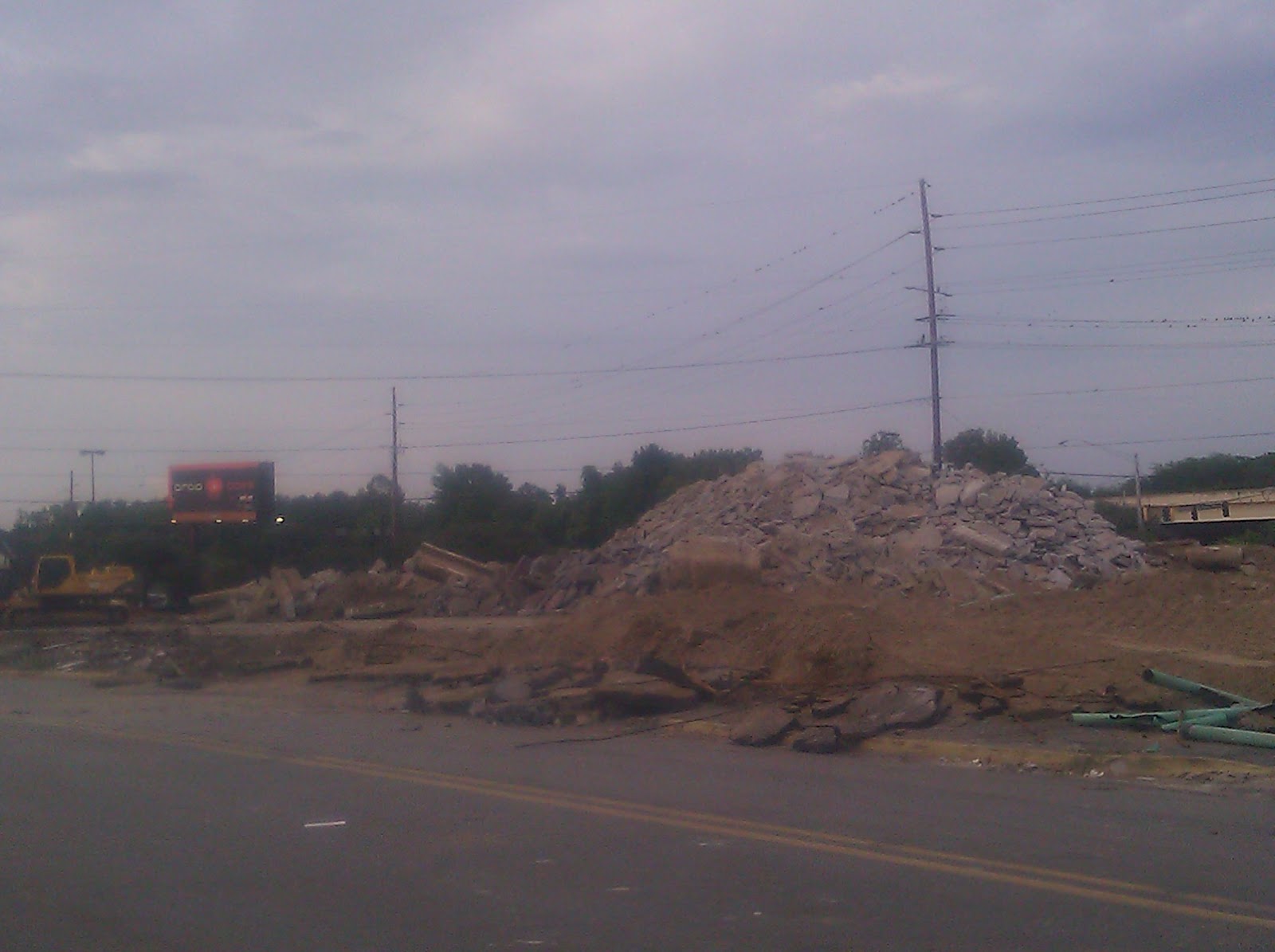
Latest pictures from the Whole Foods Market construction site. The construction site is now hard to get to because of the road closures surrounding the site. The pictures above and below are of the last remaining pieces of rumble from the Backus dealership. Surrounding buildings and warehouses have been leveled in recent days (pictures of those former sites in upcoming days.) Because of the level of construction,and danger surrounding the site ,I'll do updates every two weeks, or when  major construction developments occur. I will continue to monitor the site.